Reims has a reputation as a mineral city, made of limestone, cellars and rebuilt façades. That forgets its gardens. Ten minutes from the Basilica of Saint-Remi, on the Butte Saint-Nicaise, the Parc de Champagne — which many people in Reims still call Parc Pommery — is one of the most elegant urban parks in north-east France, and the story of how it came to be says a lot about the city.
A park paid for by champagne
By the end of the 19th century the great champagne houses employed thousands of people and shaped social life in Reims. In 1909, the heirs of the Pommery house decided to lay out, on land near their cellars, a large sports park open to their workers and, more widely, to the townspeople. The idea was new: at the time, popular physical education was only beginning to be encouraged, and public playing fields were rare. The park was conceived as a modern facility — lawns, running tracks, football and rugby pitches, play areas, terraces — serving the health and sociability of the many. Long owned by the house, it was later handed to the City of Reims, which maintains it, and it is now recognised as a remarkable garden.
The Pommery house, neighbour of the park
You only understand the park by looking at the house that created it. In the 1870s Louise Pommery, a widow at the head of the firm, had a spectacular estate built on the Butte Saint-Nicaise in a neo-Elizabethan style, all gables and brick, designed by the architect Alphonse Gosset. Beneath it she had ancient Gallo-Roman chalk pits — conical shafts cut into the chalk — linked up and decorated to age champagne; some galleries carry large carved reliefs. The house, well ahead of its time in communication and patronage, extended that logic by giving the city a park: it is industrial paternalism, but also a real gift, still in the landscape a century later.
Édouard Redont, a Reims landscape architect of European reach
The design was entrusted to Édouard Redont, a well-known Reims landscape architect. He was responsible for the redesign of the town-centre Promenades and, abroad, for large parks — notably in Bucharest, where he designed Carol Park for the 1906 jubilee exhibition. Over some twenty hectares he composed an English-style garden here: curving paths, framed views, groves, wide sunken lawns, a bandstand, flower beds, a rose garden, a green theatre. The gently rolling ground is used to multiply viewpoints, including a belvedere that frames the towers of the basilica and the cathedral. The result is nothing like a square: it is a real landscape, where you can walk for a long time without retracing your steps — the circuit of the park is nearly two kilometres.
The park through the turmoil of the wars
Barely laid out, the park met war. In 1914-1918 the front ran a few kilometres away and Reims was shelled for four years: the city lost close to 80% of its buildings, and the park, like the Promenades, came out of the Great War with shattered trees and torn-up lawns. It was replanted in the 1920s, as the city was rebuilt. Between the wars it found its role again: large gymnastics festivals, athletics meetings and school competitions drew thousands of participants. Requisitioned and then handed back after 1945, it came through the century without losing its original design — rare enough to be worth noting, and the reason its trees are so mature.
Trees, birds and a fitness trail
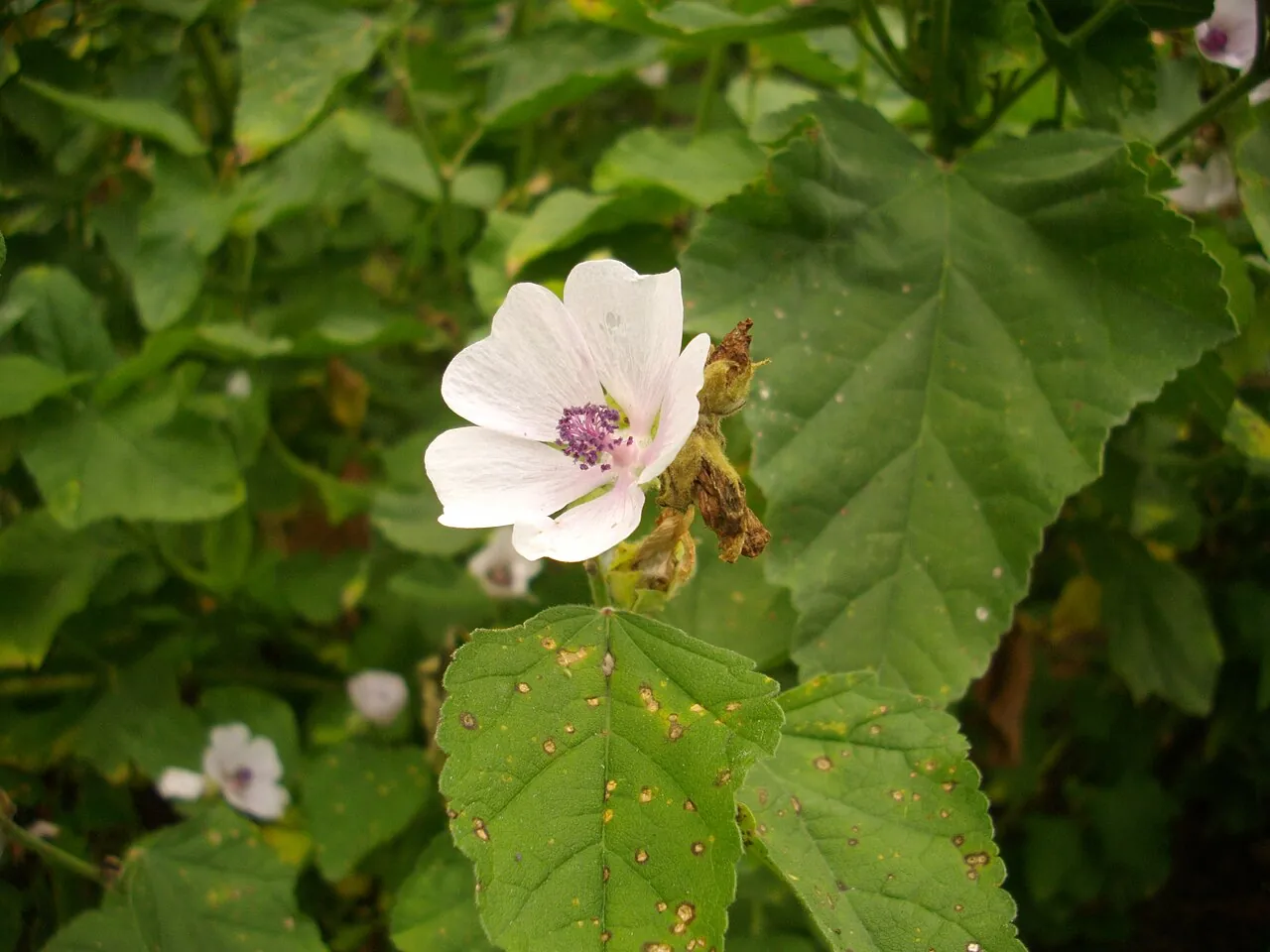
The park is also a small arboretum: planes, horse chestnuts, copper beeches, limes, maples, a few sequoias and cedars, several of them more than a century old and there from the start. In spring the rose garden and the beds draw photographers; all year, blackbirds, tits and woodpeckers, and near the ponds ducks and moorhens, hold the ground. A fitness trail dotted with exercise stations runs round the big lawns, well used in the morning and at the end of the day. Children, for their part, head straight for the play areas and the long slide built into a slope.
How it is used today
The park is free to enter and very much alive. Families, runners, pétanque players, open-air fitness classes, picnics in summer: everyone finds a corner. The bandstand and green theatre host concerts in the warm season, in particular during the Flâneries Musicales, the city’s summer festival, which gives free concerts there, and the Fête de la Musique. Children’s play areas, tables, water points and wide open lawns make it the simplest place to catch your breath between two visits, especially if you are travelling with children. Allow thirty to forty-five minutes to walk round it without hurrying.
The Butte Saint-Nicaise quarter
Around the park, the hill concentrates the history of Reims champagne: the great houses are neighbours here, and their chalk pits, along with the hillsides and cellars of the whole region, have been on the UNESCO World Heritage list since 2015. A short way off, two 20th-century curiosities deserve a detour: the Foujita Chapel, a small church entirely painted in the late 1960s by the Franco-Japanese artist Léonard Foujita and funded by a champagne house; and, further east, the Chemin-Vert garden city, a district of workers’ housing built in the 1920s along the hygienist ideas of the day — private gardens, a school, a church, a cooperative. The Parc de Champagne belongs to the same family of ideas: to give air, light and space to the greatest number.
The Promenades and the green belt of the centre
The Parc de Champagne is not on its own. Reims inherited from its former fortifications a belt of planted spaces. The Hautes and Basses Promenades, broad tree-lined malls laid out in the 18th century on the line of the ramparts and redesigned around 1900 by Redont, frame the centre to the west; here you find the Roman Porte de Mars, a carousel, a funfair in the warm season and, in winter, one of the largest Christmas markets in France. To the east, the Pierre-Schneiter horticultural garden lines up beds, rockeries and greenhouses a step from the station.
Other gardens and stretches of water
- The Parc de la Patte d’Oie, near the Porte de Paris: a formal layout, ponds, tall trees, very quiet.
- The towpath green way along the Aisne–Marne canal: a flat path for walking or cycling that links the centre to the outskirts and, further on, to the banks of the Vesle and the first vineyards.
- North of the city, the Bois de la Neuvillette and its stretch of water offer a wilder walking goal, popular with joggers and anglers.
- The squares of the centre — Square Colbert, gardens near the Town Hall — useful for a short pause between two monuments.
Further out: the Montagne de Reims nature park
For a real trip into nature, the Montagne de Reims Regional Nature Park, created in 1976, begins about twenty minutes by car, south of the city. It is the wooded massif that separates Reims from Épernay, vine-covered on its slopes and forested on its heights. There you can visit the strange wood of the Faux de Verzy, hundreds of twisted beeches unique in Europe, some several centuries old, and find belvederes — such as the Mont Sinaï observatory — that open up the view over the whole Champagne plain. The Champagne tourist road crosses the massif and passes through Hautvillers, the village of Dom Pérignon. A good complement to a cellar visit, to see where the grapes come from.
Tips for a good walk
The Parc de Champagne can be visited all year; it is especially beautiful in spring, when the beds flower, and in autumn for the colours. On concert days it is better to arrive early. The main paths are passable with a pushchair and for people with reduced mobility. There is no café in the park itself: bring water and something to nibble — the Halles du Boulingrin or a box of pink biscuits will do — or take your break beforehand in one of the local cafés. Public toilets are open near the main entrances in season. Dogs on a lead are allowed on the paths, and the park closes at night, with hours posted at the gates that change from month to month. If you have a bike, the towpath links the park to the canal and, beyond, to the first vineyards, for an easy half-day loop.
Getting there
The Parc de Champagne is about ten minutes on foot from the Esplanade Fléchambault, up the Butte Saint-Nicaise, along from the basilica and the Musée Saint-Remi. The natural sequence: basilica and museum in the morning, lunch in the neighbourhood, then the park to walk it off before heading to the champagne cellars or the cathedral. In summer, an evening concert at the bandstand makes a fine end to the day, a short walk back down to your hotel. To build your day, see also “Visiting Reims in a day”.
Need a local professional in Reims?
Locksmith, plumber, mechanic, vet… Tell us what you need and we will put you in touch with a trusted Reims professional. Free.
Photo : Fab5669 — CC BY-SA 3.0 · Wikimedia Commons