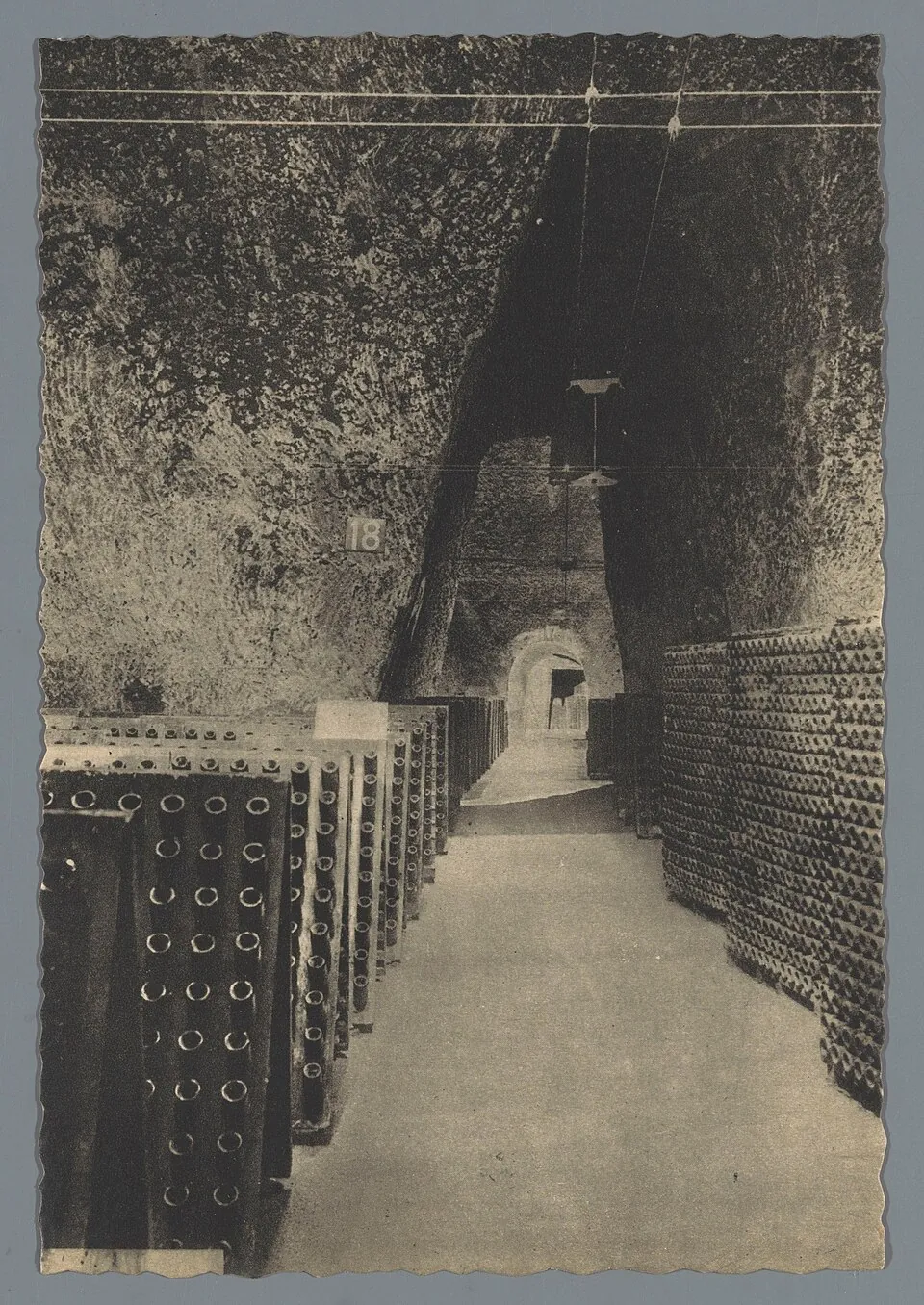
Along with Épernay, Reims is one of the two capitals of Champagne. The city is home to several of the largest houses and, above all, to a treasure invisible from the street: its crayères. These shafts and galleries cut into the chalk were first opened in Gallo-Roman times to quarry building stone. Rediscovered and extended in the 18th century, they offer exactly what sparkling wine needs: a steady temperature of around 10–12 °C, darkness, humidity and quiet.
A century of invention in Reims
Champagne as we drink it today owes a great deal to Reims. It was here that Nicole Barbe Ponsardin, the “Widow Clicquot”, developed the riddling table around 1816, the method that yields a clear wine. The Reims houses — Veuve Clicquot, Mumm, Taittinger, Pommery, and Ruinart, the oldest of all (1729) — built a worldwide trade in the 19th century, with cellars that sometimes descend thirty metres and run for several kilometres.
Going down into the cellars
Several houses can be visited, nearly all of them grouped in the Champ de Mars district and on the Saint-Nicaise hill, a short distance from the Basilica of Saint-Remi. A typical visit lasts one to one and a half hours: you go down a staircase, walk through the cold between racks and great casks, hear the history of the house, then come back up for a tasting of one to three cuvées. It is best to book ahead, especially from May to September and at weekends.
How a bottle is made
Champagne is made in two stages. First still wines are produced, usually by blending several grape varieties, several villages and sometimes several years: this blending is the houses’ real craft. The wine is then bottled with a little sugar and yeast — the tirage — and a slow second fermentation creates the bubbles in the cold of the cellars.
Then come ageing on the lees, fifteen months at the very least and often far longer; riddling, which works the sediment down into the neck; and disgorging, which shoots it out. A final dosage of liqueur sets the style, from brut nature to demi-sec, before labelling. Since 2015 the hillsides, houses and cellars of Champagne have been on the UNESCO World Heritage list: it is this whole landscape, from vine to chalk, that the listing honours.
Where to enjoy a glass in Reims
You do not have to go down into a cellar to taste the local wine: most bars and restaurants in Reims serve Champagne by the glass, as an aperitif or with dessert. It is the simplest way to round off a cellar visit — without getting back on the road.
Need a local professional in Reims?
Locksmith, plumber, mechanic, vet… Tell us what you need and we will put you in touch with a trusted Reims professional. Free.
Photo : Rijksmuseum — CC0 · Wikimedia Commons